
Freight paperwork is not administrative decoration: it helps the shipper, carrier, warehouse, and receiver describe the same load. When documents and freight disagree, a delivery can be delayed while teams clarify what is on the truck, where it is going, or which party should receive it. For an Ottawa-area retailer, wholesaler, or eCommerce business sending inventory to a warehouse, a short document review before pickup can prevent avoidable calls, rebooking, and receiving exceptions.
This guide focuses on common Canadian domestic freight and warehouse delivery preparation. Requirements vary by carrier, shipment type, customer, and product. Follow the carrier’s current instructions, the receiver’s booking rules, and any contract or regulatory requirements that apply. Do not treat a general checklist as a substitute for customs, dangerous-goods, food-safety, or legal advice.
Which documents are commonly used for freight?
The exact document set depends on the shipment, but these records commonly support a domestic commercial freight move:
- Bill of lading (BOL): the shipment document used by the shipper and carrier to identify the parties, freight, handling instructions, and transport details. Complete the carrier’s required fields and keep a copy with the shipment record.
- Packing list: a contents summary that helps the receiver understand what is in each carton, pallet, or crate. Include SKU or product description, quantity, unit of measure, and package reference where useful.
- Purchase order or receiving reference: the customer’s PO, transfer number, delivery number, or other identifier that lets the receiving team match goods to an expected receipt.
- Carrier booking or appointment confirmation: the pickup number, delivery date or window, and any reference the dock or carrier requires.
- Commercial invoice and customs records: relevant when goods are imported or exported; these are separate from a domestic BOL and may involve the importer, customs broker, carrier, and Canada Border Services Agency (CBSA).
The Canada Post guide to completing a domestic bill of lading explains common fields on its own BOL form, including ship-to details, reference, and shipment information. Carrier forms are not interchangeable, so use the form and instructions for the service you booked.
Make the bill of lading match the physical load
Start with the carrier’s BOL or shipping system. Enter the shipper and receiver names, addresses, postal codes, contact details, pickup and delivery references, and any service requirements the carrier requests. Confirm the address against the receiving facility’s instructions—not only a map pin or an old purchase order.
Describe the freight clearly enough that the carrier and receiver can identify it. Record package type, number of handling units, pallet count, total weight, dimensions where required, and a useful product description. If the freight contains multiple SKUs or customer orders, use the packing list to detail them rather than relying on a vague BOL description such as “goods” or “merchandise.”
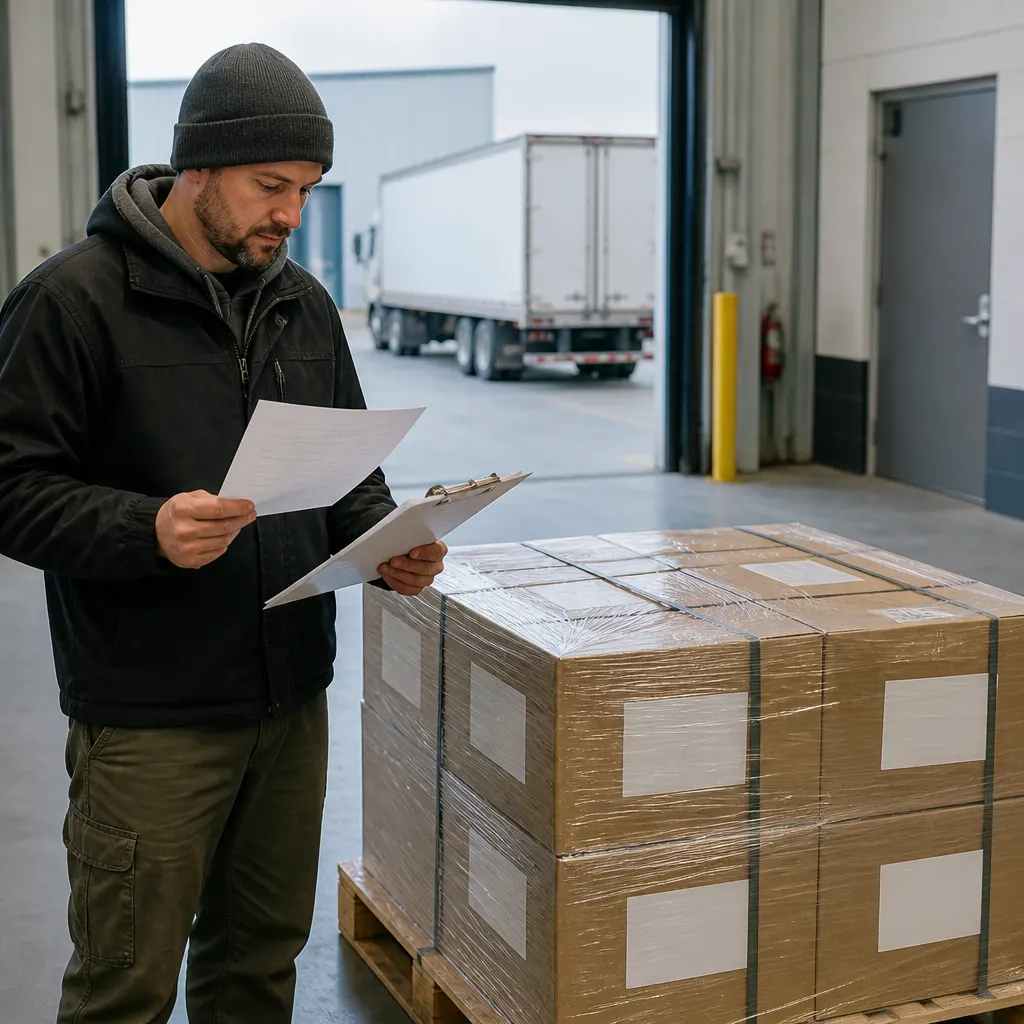
Check consistency across documents. If the BOL says four pallets but the pickup presents three, correct the record before the driver leaves. Ensure the packing list’s carton and unit totals reconcile with the pallet labels and expected inventory. Note visible damage or exceptions at handoff and follow the carrier’s process for recording them.

Build a packing list a warehouse can actually use
A packing list should help a receiver answer three questions: what was sent, how much was sent, and where to find it. For palletized stock, list each SKU or product, quantity, unit of measure, carton count, and pallet or carton identifier. If one pallet contains several items, indicate the mixed contents. If each pallet contains a single item, say so and match the pallet label to the list.
For businesses using a warehouse management system, keep item codes consistent with the approved SKU master. Avoid switching between product names, old codes, supplier codes, and store-facing names without a cross-reference. Where lot, serial, expiry, or batch tracking applies, confirm how those details should be supplied before shipping. Do not assume the receiver can infer the right code from a marketing description.
A practical packing list may include:
| Field | Why it helps |
|---|---|
| Sender and receiver | Confirms the parties and destination |
| PO or transfer reference | Connects the physical delivery to an expected receipt |
| SKU and plain-language description | Helps identify each product |
| Quantity and unit of measure | Makes a count comparable with the order |
| Carton and pallet counts | Supports unload and receiving reconciliation |
| Pallet or carton identifier | Helps locate contents and report exceptions |
| Handling notes | Flags agreed conditions such as fragile or upright handling |
Use the receiver’s requested template when one exists. Keep the packing list accessible to the receiving team and avoid attaching unnecessary personal or confidential information.
Confirm delivery conditions before booking the carrier
Freight that is packed correctly can still miss its delivery if the appointment or site details are wrong. Before dispatch, ask the receiver whether deliveries require an appointment, which hours are accepted, what lead time applies, and what reference must appear on the request. Confirm whether there is a dock, forklift, pallet jack, or other unloading equipment available.
Tell the carrier if the destination needs a liftgate, inside delivery, limited-access service, residential delivery, or another special option. These services depend on carrier availability and the actual site. Do not select an option simply because it appeared on a previous shipment; verify the current receiving conditions and charges with the carrier.
Share a working contact name and phone number for pickup and delivery. Confirm whether the driver must call ahead, where to check in, and what happens if the appointment is missed. If the load is arriving at a 3PL, provide the warehouse with the PO or transfer reference and the shipment information early enough for its team to prepare.
Prepare pallets and labels for safe handling
Use pallets or crates that can support the freight and be moved with the equipment available at both ends. Distribute weight evenly, keep the load stable, and secure cartons so they do not shift during transport. Do not allow product to overhang the pallet if the receiver or carrier prohibits it. Use stretch wrap and corner protection where appropriate for the product and route.
Place labels where staff can read them without unwrapping or climbing on the load. A useful pallet label identifies the shipper, destination, PO or transfer reference, pallet number within the shipment, and any SKU or handling detail requested by the receiver. If a shipment has several pallets, label them in sequence (for example, “1 of 4”) and ensure every number appears on the packing list.
Photograph the finished load when it helps document condition and pallet count. This is not a replacement for carrier inspection or proof of delivery, but it can provide a time-stamped record of what was staged for pickup. Keep photos linked to the shipment reference and follow company privacy and retention rules.
A practical pre-dispatch checklist
Use this sequence before releasing freight:
- Confirm the destination. Verify the legal or receiving name, full street address, postal code, dock instructions, and contact.
- Confirm the delivery reference. Check that the PO, transfer number, or appointment ID is valid and appears where requested.
- Count handling units. Record cartons, pallets, crates, total units, and weight using the carrier’s required units.
- Reconcile documents. Make sure the BOL, packing list, booking, and physical labels agree.
- Verify equipment and access. Confirm dock, liftgate, forklift, appointment, access restrictions, and hours.
- Identify exceptions. Flag mixed pallets, special handling, temperature requirements, oversized freight, or damage before the carrier accepts the load.
- Save the handoff record. Keep the signed or electronic BOL, packing list, booking details, and shipment photos with the order or transfer file.
From booking to warehouse receipt
- 101
Match — Align the PO, BOL, packing list, pallet labels, and physical count.
- 202
Confirm — Book the receiving window and verify dock, equipment, hours, and contacts.
- 303
Dispatch — Give the carrier complete pickup instructions and keep the handoff record.
- 404
Receive — Count units, document exceptions, and reconcile against the expected receipt.
Domestic freight versus imported goods
A domestic truck shipment within Canada generally needs the commercial and carrier records required by the parties involved. An import shipment has additional steps. The CBSA’s commercial import guide explains that commercial goods must be reported and provides information about ordering, shipping, reporting, and release. The importer remains responsible for understanding the requirements that apply to its goods, even when a customs broker or carrier assists.
Before imported inventory is sent onward to an Ottawa warehouse, coordinate the customs and freight handoffs. Confirm who is importer of record, who arranges the broker, what shipment and invoice details are required, where the goods are expected to be released, and whether the delivery appointment can be booked before release. A warehouse receiving appointment does not clear goods through customs. Ask the broker or relevant authority about product-specific classification, permits, duties, taxes, and release questions.
Do not copy import paperwork assumptions into a domestic transfer. A transfer between two Canadian facilities may still need a BOL and receiving references, but it is not automatically an import transaction. Keep records tied to the actual movement.
Worked example: three pallets arriving at a 3PL
Consider a hypothetical Ottawa retailer sending three pallets of replenishment stock from a supplier in Ontario to a fulfillment warehouse. The shipper creates a BOL with the correct pickup and delivery addresses, the carrier’s requested service, and three handling units. The packing list identifies the transfer reference, each SKU, carton count, unit quantity, and pallet number. Each pallet is labeled “1 of 3,” “2 of 3,” or “3 of 3.”
Before pickup, the retailer confirms the receiving window, dock access, and receiving contact with the warehouse. The warehouse confirms the transfer reference and explains how mixed-SKU pallets should be identified. The carrier receives the booking and access instructions. At delivery, the receiver counts the three pallets, checks visible condition, compares the received items with the list, and records any discrepancy against the same reference.
The numbers in this example describe a hypothetical shipment, not a guaranteed process or a statement of any provider’s service levels. A real load may require additional details because of product type, customer rules, carrier service, or import status.
For Ottawa businesses arranging warehouse receipt or cross-dock handling, Ottawa Distribution’s freight receiving and cross-docking service describes its local service offering. ByExpress also publishes information about its Ottawa warehousing and logistics services; confirm current requirements and appointment procedures directly with the provider before dispatch.
If the shipment is part of moving stock to a different fulfillment partner, read our 3PL switching and inventory cutover checklist to coordinate the documents with the provider transition plan.
Sources and further reading
- Canada Post: How to complete a domestic bill of lading
- CBSA: Guide to importing commercial goods into Canada
- ShipCanada: Preparing a shipment using pallets or crates
Frequently Asked Questions
Is a bill of lading required for every freight shipment in Canada? The required paperwork depends on the carrier, service, shipment, and customer agreement. Use the carrier’s current form and ask what must accompany the load. A BOL is commonly used for commercial freight, but a general guide cannot establish every contract or legal requirement.
### What is the difference between a bill of lading and a packing list? A BOL is a carrier and shipment document with transport and party details. A packing list breaks down what is inside the cartons, pallets, or crates. They serve different purposes and should describe the same shipment.
What is the difference between a bill of lading and a packing list? A BOL is a carrier and shipment document with transport and party details. A packing list breaks down what is inside the cartons, pallets, or crates. They serve different purposes and should describe the same shipment.
### Do I need a customs invoice for freight moving within Canada? Not simply because the load is freight. Customs documentation applies when goods are imported or exported; confirm requirements with the importer, broker, carrier, and relevant authorities. A domestic movement may still need a BOL, packing list, PO, or receiver reference.
Do I need a customs invoice for freight moving within Canada? Not simply because the load is freight. Customs documentation applies when goods are imported or exported; confirm requirements with the importer, broker, carrier, and relevant authorities. A domestic movement may still need a BOL, packing list, PO, or receiver reference.
### What should I put on a pallet label? Use the receiver’s required format. Common useful details include destination, shipment or PO reference, pallet sequence, SKU or contents identifier, and handling notes. Make sure the label matches the packing list and is visible to the receiving team.
What should I put on a pallet label? Use the receiver’s required format. Common useful details include destination, shipment or PO reference, pallet sequence, SKU or contents identifier, and handling notes. Make sure the label matches the packing list and is visible to the receiving team.
### Should I book a warehouse delivery appointment? Ask the receiving warehouse before dispatch. Some facilities require appointments or advance shipment information, while rules vary by site and shipment. Confirm available dates, accepted hours, dock conditions, and the reference the driver needs.
Should I book a warehouse delivery appointment? Ask the receiving warehouse before dispatch. Some facilities require appointments or advance shipment information, while rules vary by site and shipment. Confirm available dates, accepted hours, dock conditions, and the reference the driver needs.
### What should I do if the freight count does not match the documents? Record the actual count and visible condition at handoff, note the discrepancy on the appropriate carrier or receiving record, notify the shipper and receiver, and retain supporting evidence. Follow the carrier’s claim and exception process; do not change inventory records without an authorized reconciliation.