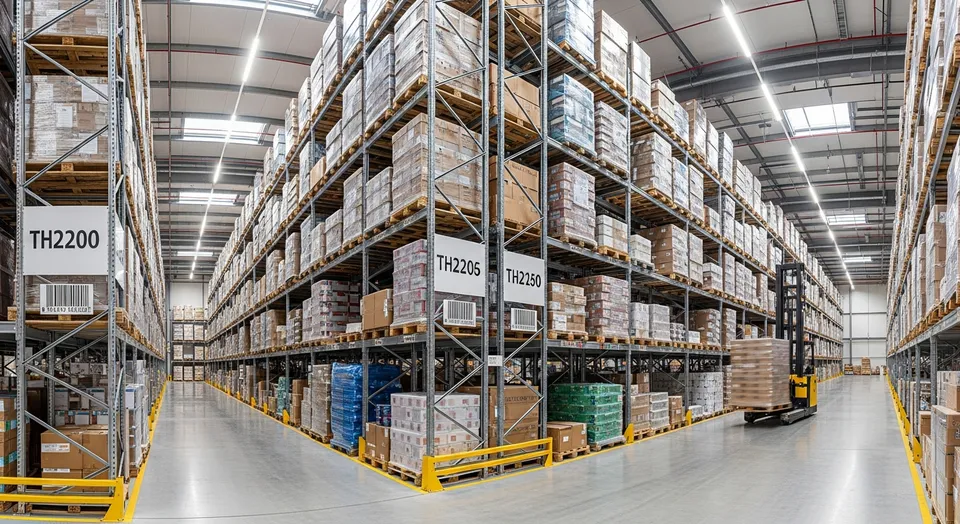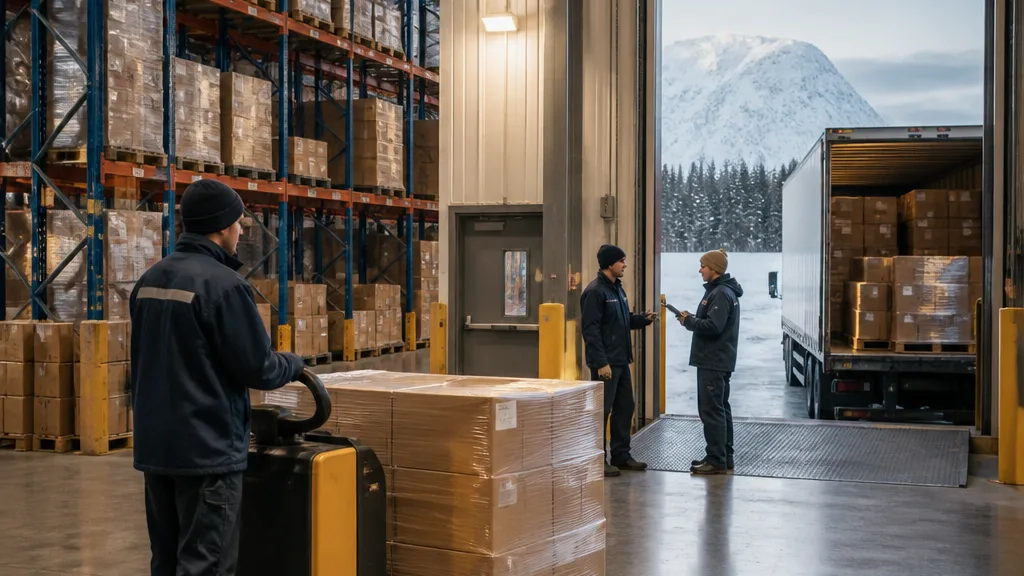
A Canadian business can ship nationally from one warehouse, but every order then starts from the same point. For customers far from that facility, the result may be a longer delivery promise, a higher parcel rate, or both. Adding another warehouse can shorten some routes, but it also divides stock, increases coordination, and creates more places where inventory can be wrong.
Distributed warehousing is the practice of positioning inventory across multiple locations to serve different customer regions. It is a network decision, not simply a choice to rent more space. This guide explains how the model works, when an additional node may be worthwhile, what costs to include, and how to test a Canadian network without committing too early.
What Is Distributed Warehousing?
Distributed warehousing is a fulfillment model in which a business holds saleable inventory at multiple facilities and routes each order to an appropriate location. The network might include company-owned sites, a third-party logistics provider (3PL), or a mix of both. A distributed network can be regional, with two nearby facilities, or national, with nodes in separate Canadian markets.
It is different from simply using more than one building. A functioning network needs shared inventory records, rules for order routing, and clear procedures for replenishment, transfers, returns, and exceptions.
The key distinction from centralized warehousing is where inventory is held. A centralized model pools stock in one primary facility. A distributed model positions some of that stock in other regions. A 3PL, meanwhile, describes an outsourced logistics relationship rather than a location strategy; a 3PL may operate one facility or support a multi-node arrangement. See our comparison of 3PL and traditional warehousing.
How Does a Multi-Location Network Work?
The basic flow starts with an inventory placement plan. The business estimates demand by region and product, assigns stock to each facility, and sets reorder or transfer triggers. When an order arrives, the order-management or warehouse system selects an eligible location based on stock availability, destination, service promise, and shipping cost.
An allocation rule might send an order from the closest stocked node, while also accounting for split-shipment risk, carrier service, cutoff times, and local safety stock. Decide in advance whether orders can be split between warehouses or should ship complete from one location.
The physical flow matters too. Suppliers may ship directly to one facility, or inbound freight can be divided between nodes. A transfer between warehouses is not free: it adds handling, transport, receiving, and a period when the goods may be unavailable for sale. If the products arrive as pallets or mixed freight, plan the receiving and documentation process as carefully as the outbound parcel process.

When Does Adding a Second Warehouse Make Sense?
A second location is worth evaluating when order history shows a persistent regional pattern, not just a handful of distant customers. Look at destination postal codes, parcel weights and dimensions, service levels, returns, peak periods, and the proportion of orders that could be served from a proposed node. Compare representative weeks as well as seasonal peaks.
The model is more promising when:
- A meaningful share of orders repeatedly travels long distances from the current facility.
- Delivery speed or shipping cost is limiting conversion, retention, or a retailer service commitment.
- Products have enough demand and margin to justify holding stock in another region.
- Replenishment can be planned reliably, with enough lead time to avoid emergency transfers.
- The business has systems and staff able to see and control inventory by location.
It is less attractive when demand is thin or unpredictable, products are bulky or slow-moving, stock expires quickly, or the new site would add service complexity without materially changing the customer promise. Businesses with seasonal demand can test a temporary or provider-managed arrangement before permanently splitting their assortment.
Fast service does not always require a national warehouse footprint. For some companies, one strategically placed facility combined with carrier choice, scheduled linehaul, and clear delivery expectations is simpler. A regional delivery option may also be sufficient in the home market; the broader question of local delivery is covered in our guide to last-mile delivery.
Centralized vs. Distributed Warehousing
Neither setup is automatically cheaper or faster. The right comparison includes inventory carrying cost, outbound transportation, inbound replenishment, warehouse operations, technology, and the cost of missed service promises.
| Decision factor | Centralized inventory | Distributed inventory |
|---|---|---|
| Stock visibility | One main pool is easier to count and reconcile | Requires accurate, location-level records |
| Customer proximity | Some destinations may be far from the facility | Selected regions can be served from nearer stock |
| Outbound parcel cost | Fewer facilities, but more long-distance shipments | Some zones may cost less; other lanes may not improve |
| Inventory risk | Less duplicated safety stock | Stock can be stranded in the wrong region or run out locally |
| Operations | Simpler staffing and replenishment | More receiving, transfers, rules, and partner coordination |
| Best fit | Concentrated demand or early-stage operations | Repeatable regional demand that can support extra nodes |
Use actual shipment data and written facility quotes; rates, parcel mix, and service differ by lane.
How Should a Canadian Business Choose Warehouse Locations?
Begin with customer demand and transportation lanes, then assess facilities. A map reveals order concentration, but not whether a site can handle your products or be replenished economically. In Canada, a central location may still leave northern, rural, or remote destinations with longer service times.
Evaluate each candidate location against the same checklist:
- Demand coverage: What recent order volume, product mix, and peak volume would this site serve?
- Inbound access: How will suppliers or the primary warehouse replenish it, and what are the transit time and minimum shipment sizes?
- Outbound options: Which parcel, LTL, or regional delivery services are actually available from the site?
- Facility fit: Can it handle product dimensions, pallet profiles, storage conditions, lot tracking, and any regulated handling needs?
- Operating calendar: What are receiving hours, order cutoffs, holiday schedules, and escalation contacts?
- Data and control: Can the business view stock, orders, adjustments, and cycle counts by node in one system?
For national transportation context, Transport Canada’s overview of the transportation supply chain describes the connected contributors that move goods across the country. For cost context, Statistics Canada’s Transportation and Supply Chain Indices track changes in for-hire freight volumes and supply-chain service prices. These indicators provide national context; they do not replace a business-specific lane analysis or a current carrier quote.
What Costs and Trade-Offs Should Be Modelled?
Compare the full cost of delivering an order, not only the parcel label or monthly pallet rate. A second site may lower outbound cost on some lanes while increasing fixed storage, receiving, labour, inventory, and transfer expenses. It can also require extra safety stock because the business can no longer rely on one shared pool.
For each scenario, estimate:
- Facility charges: storage, receiving, handling, minimums, account fees, and peak surcharges.
- Inventory cost: additional units held, working capital, expiry or obsolescence exposure, and shrink.
- Transportation: inbound freight, inter-warehouse transfers, outbound parcels, and returns.
- Systems and labour: warehouse-management integration, order routing, reporting, cycle counting, and customer support.
- Service impact: delivery-time changes, split shipments, failed promises, and the cost of stockouts.
Use the same recent orders in both scenarios. Calculate a weighted cost per shipped order by destination and product, then add the carrying and operating costs of the extra node. Compare that total with the current network and record assumptions such as carrier fuel charges, residential surcharges, storage minimums, and order-growth forecasts. For more on parcel economics, see our guide to reducing shipping costs for Canadian businesses.
How Do You Keep Inventory Accurate Across Locations?
Multi-site fulfillment raises the cost of a data error: a stock count that is wrong in one building can cause overselling there even while the same item sits idle elsewhere. Set one system of record and make each facility use consistent SKU definitions, units of measure, barcode labels, receiving checks, adjustment reasons, and inventory status codes.
Practical controls include:
- Record every receipt, pick, return, damage, and transfer against the correct facility.
- Use cycle counts based on movement and risk, with documented investigation of variances.
- Separate available, reserved, damaged, quarantine, and in-transit stock.
- Set replenishment triggers that account for supplier lead time and transfer time.
- Review regional sell-through and aging stock before moving inventory or buying more.
- Test order routing, cancellation, and backorder rules before enabling a new node.
Inventory software is only as reliable as the events people record. A warehouse-management system should make routine work easier and produce auditable records, not hide exceptions. Businesses that need operational support can compare what a 3PL does with in-house inventory management and pick-and-pack fulfillment.
What Businesses Typically Value in a Logistics Partner
These are common evaluation priorities, not customer testimonials or promises about a particular provider:
Visibility
Stock, orders, transfers, and exceptions are easy to review by warehouse.
Cost clarity
Quotes explain receiving, storage, fulfilment, freight, and additional charges.
Operational fit
The provider can document product handling, cutoffs, returns, and escalation steps.
Questions to Ask Before You Add a Location
Ask potential warehouse operators or 3PLs for written answers that can be compared across sites:
- Which facility would hold each SKU, and how is the allocation changed over time?
- What charges apply to receiving, storage, picks, transfers, returns, and slow-moving stock?
- How often will inventory be counted, and how are discrepancies researched?
- Which order-routing rules and system integrations are included?
- Who pays for stock transfers, and how long does a transfer typically take?
- What happens when one facility is out of stock but another has units available?
- Can the provider share lane-level service and cost reporting for a trial period?
If evaluating an outsourced network, compare the specific services and node availability rather than relying on a map or a broad “Canada-wide” label. Businesses can review ByExpress’s logistics services and its Canadian 3PL fulfillment overview, then confirm which locations, inventory controls, transfer terms, and delivery services are available for their own products.
Frequently Asked Questions
What does distributed warehousing mean?
Distributed warehousing means storing inventory in more than one warehouse so orders can be fulfilled from locations serving different customer regions. The model requires shared inventory visibility and rules for allocating, replenishing, and transferring stock. It is intended to improve the relationship between inventory location and customer demand, but it adds operating cost and complexity that a business should measure before expanding.
Is distributed warehousing the same as using a 3PL?
No. Distributed warehousing describes where inventory is located. A 3PL is an external provider that performs logistics services such as receiving, storage, order picking, packing, shipping, and returns. A company can operate a distributed network itself, outsource one or more sites to a 3PL, or use a provider with multiple locations. The contract should state which facilities and services are actually included.
When should a business add a second warehouse?
Consider a second warehouse when order history shows durable demand in a region, longer delivery or high shipping cost is a business problem, and the product margin and replenishment plan can support the extra stock. Model all facility, transport, labour, system, inventory, and transfer costs. A temporary or limited-SKU trial can help test the idea before moving the full assortment.
Does distributed warehousing always reduce shipping costs?
No. A nearer warehouse can shorten some parcel lanes, but savings depend on carrier pricing, shipment dimensions, destination mix, and how much stock must be duplicated. Inbound freight, transfers, extra storage, and carrying more safety stock can outweigh outbound savings. Compare the weighted total cost using actual orders and written quotes for each candidate facility.
How should inventory be split between warehouses?
Use order history by region, SKU velocity, seasonality, product margin, supplier lead times, and replenishment reliability. Fast-moving products with stable regional demand are easier to allocate than slow, irregular, or perishable items. Keep a defined safety-stock policy, review aging stock, and set transfer triggers so one site does not accumulate excess while another repeatedly runs out.
How many warehouse locations does a Canadian business need?
There is no standard number. Some businesses can serve their customers well from one facility; others may benefit from regional nodes as order volume and delivery expectations grow. The decision depends on where customers are, the products being shipped, carrier lanes, replenishment economics, service commitments, and the business’s ability to control stock across sites. Test the smallest network that solves a measurable problem.
Consider the Network Before You Commit
Distributed warehousing can improve regional service when demand, inventory discipline, and transportation economics support it. Start with a lane-level baseline, price the complete operating model, and pilot a small set of products or destinations before making a permanent network change. If you are comparing outsourced options, explore ByExpress and verify the facility, service, and reporting details that apply to your business.