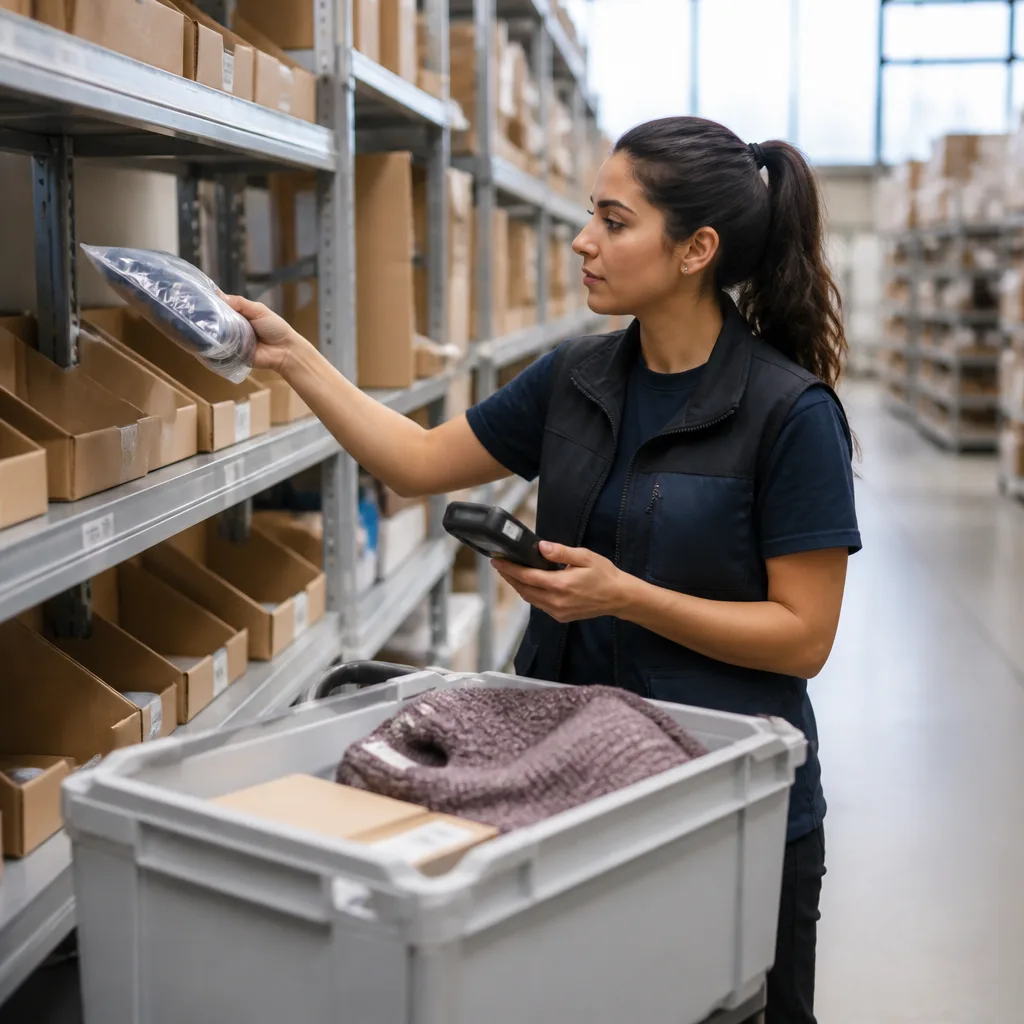
For an online store, the customer sees a confirmation email and then a parcel at the door. Between those moments, warehouse staff or systems must reserve the right inventory, find each item, verify the order, package it safely, apply the correct label, and record the shipment. Gaps in any step can lead to a wrong item, unnecessary reshipment, damaged goods, or a customer asking where an order is.
This guide explains pick and pack as an operational workflow, compares common picking methods, and gives a checklist for assessing in-house fulfillment or a third-party logistics provider (3PL). It complements our broader eCommerce fulfillment guide for Canada with a closer look at order picking and packing.
What do pick and pack services include?
Pick and pack describes selecting ordered products from storage and preparing them for shipment. A complete service may also include receiving, storage, inventory records, order import, packaging materials, shipping labels, tracking updates, returns, and customer-service escalation. The phrase alone does not define which of those activities are included, so compare written scopes rather than relying on a service label.
In a typical order, the sales platform sends approved order information to a fulfillment system. The warehouse checks that the order can be fulfilled, reserves stock, and releases work to a picker. The picker locates products and confirms their identifiers and quantities. At packing, the team checks the order, selects packaging, secures the goods, adds required inserts if applicable, and produces a label or shipment record. The system then records dispatch and sends tracking information to the selling channel.
Canada Post’s pick-and-pack process overview for businesses describes different picking methods and how process choices can influence efficiency and errors. Use the details as operational context; the right method for a particular warehouse depends on its order pattern, layout, and technology.
What are the main steps from order to carrier pickup?
1. Import and validate the order An order should enter the warehouse workflow with a unique identifier, product SKUs, quantities, ship-to information, requested service, and any relevant packing instructions. Automated validation can catch missing address fields, unsupported destinations, payment holds, or items that are not eligible to ship. Define who handles exceptions and whether the order remains on hold until corrected.
2. Reserve inventory The system should distinguish available inventory from stock already committed to other orders. Reservation rules need to account for bundles, kits, backorders, safety stock, and orders that are cancelled or changed. If orders can ship from multiple facilities, define when splitting is allowed and how the customer-facing promise is updated.
3. Pick items The picker receives a task or list showing which items to retrieve, from which location, and in what quantity. Scanning a product or location can help confirm that the worker is at the correct bin and has selected the intended SKU. If there is a shortage, damage, or mismatch, the picker should record the exception rather than substitute an item without approval.
4. Verify and pack At the packing station, the order is checked before it is closed. A scan, visual check, or weight comparison may be used depending on the products and system. Choose packaging that protects the goods and suits their size, fragility, and shipping requirements. Add customer-approved inserts or compliance material only when the order rules call for it.
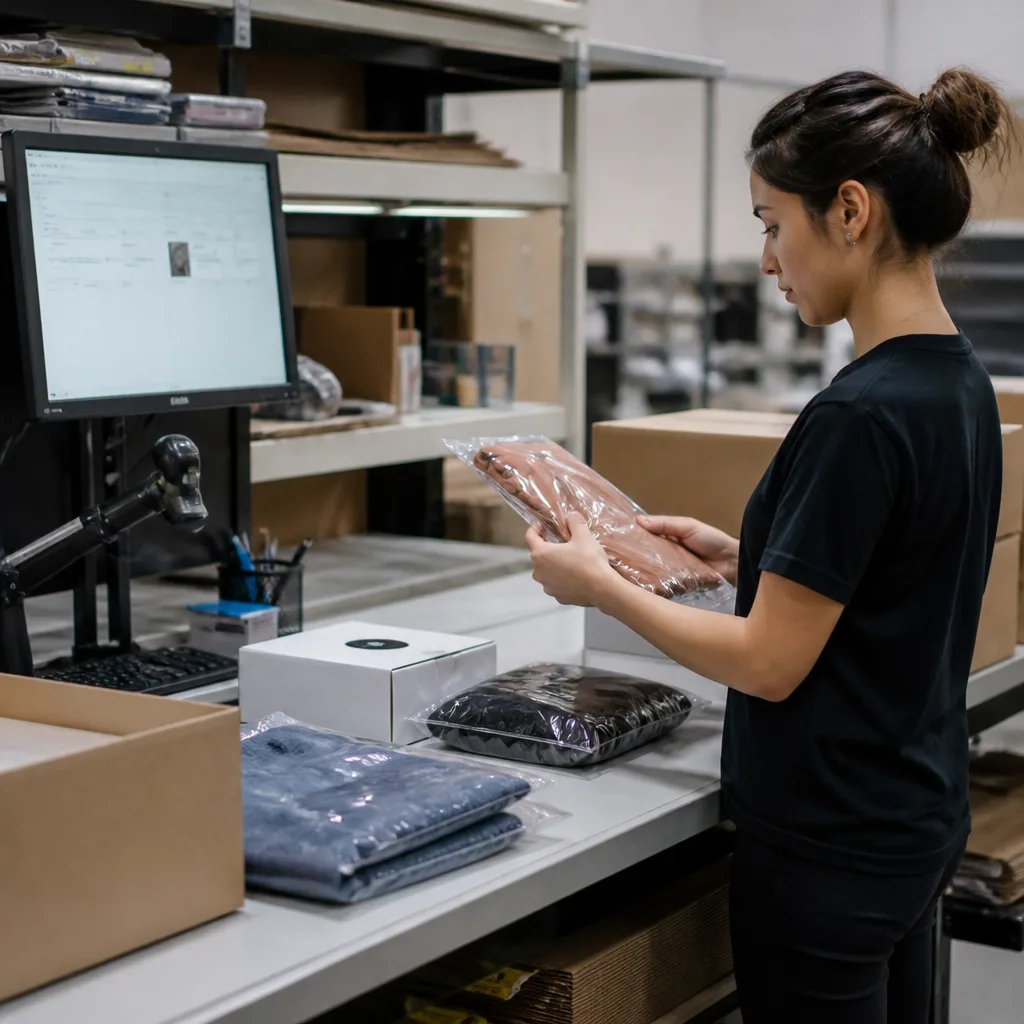
5. Label, manifest, and confirm dispatch The parcel receives the correct destination label and carrier service. The shipment record should connect the order, tracking number, package count, and dispatch event. Before the carrier collects, staff should reconcile parcels against the manifest or collection process so a label printed for one order is not attached to another package.
6. Handle returns and exceptions A return needs a clear authorization and inspection workflow. Staff should record the reason, inspect the condition, and determine whether the item can be returned to sellable stock, held for review, repaired, or removed from inventory. Returned product should not automatically become available until its status has been checked and updated.
Which picking method fits your order pattern?
| Method | How it works | Often useful when | Watch for |
|---|---|---|---|
| Discrete picking | One worker picks one order at a time | Low volume or simple single-order workflows | Repeated travel across the same aisles |
| Batch picking | One trip collects items for several orders | Many orders share SKUs or locations | Sorting picked units back to each order |
| Zone picking | Workers pick items from assigned warehouse zones | Larger facilities or distinct product areas | Handoffs and timing between zones |
| Wave picking | Orders release in planned groups using time or carrier rules | Cutoffs, carrier collections, or workload planning matter | Bottlenecks if waves release unevenly |
These methods can be combined, and the names used by software vendors may differ. A small shop with low daily order counts may benefit more from simple, easy-to-check discrete picks than from a complex batch workflow. A larger facility may reduce duplicated travel with batch or zone work, but it needs clear sorting, order consolidation, and verification.
The Canada Post pick-and-pack guide discusses basic, batch, and zone approaches. Treat the choice as a process-design question: test a representative order mix, include walking and handoff time, and compare accuracy as well as speed.
From online order to carrier handoff
- 11 · Release
Validate the order and reserve the right inventory.
- 22 · Pick
Retrieve the listed SKU and quantity from the assigned location.
- 33 · Verify
Resolve mismatches or damage before the order is closed.
- 44 · Pack and label
Protect the goods and match the parcel to its shipment.
- 55 · Confirm dispatch
Record the carrier handoff and send tracking updates.
How can a business reduce avoidable pick and pack errors?
Start with item and location data. Each SKU should have a consistent identifier, useful description, barcode where appropriate, and correct unit of measure. Similar-looking items need distinguishable descriptions or images in the picking interface. Bin labels should be readable and consistent with the system record.
Separate physical storage by product characteristics. Fragile, heavy, temperature-sensitive, regulated, or high-value products may need specific locations and procedures. Keep receiving, damaged goods, returns, and available-to-sell stock clearly separated. The exact controls depend on the products and applicable rules; document them and train staff.
Create a check at the points where mistakes become expensive. That may include a scan at pick, a second confirmation for high-risk products, and an order check at packing. Avoid adding checks everywhere by default. Review the error types and their origins: wrong item, wrong quantity, wrong address, packaging damage, label mismatch, or late dispatch. Then improve the step that caused the issue.
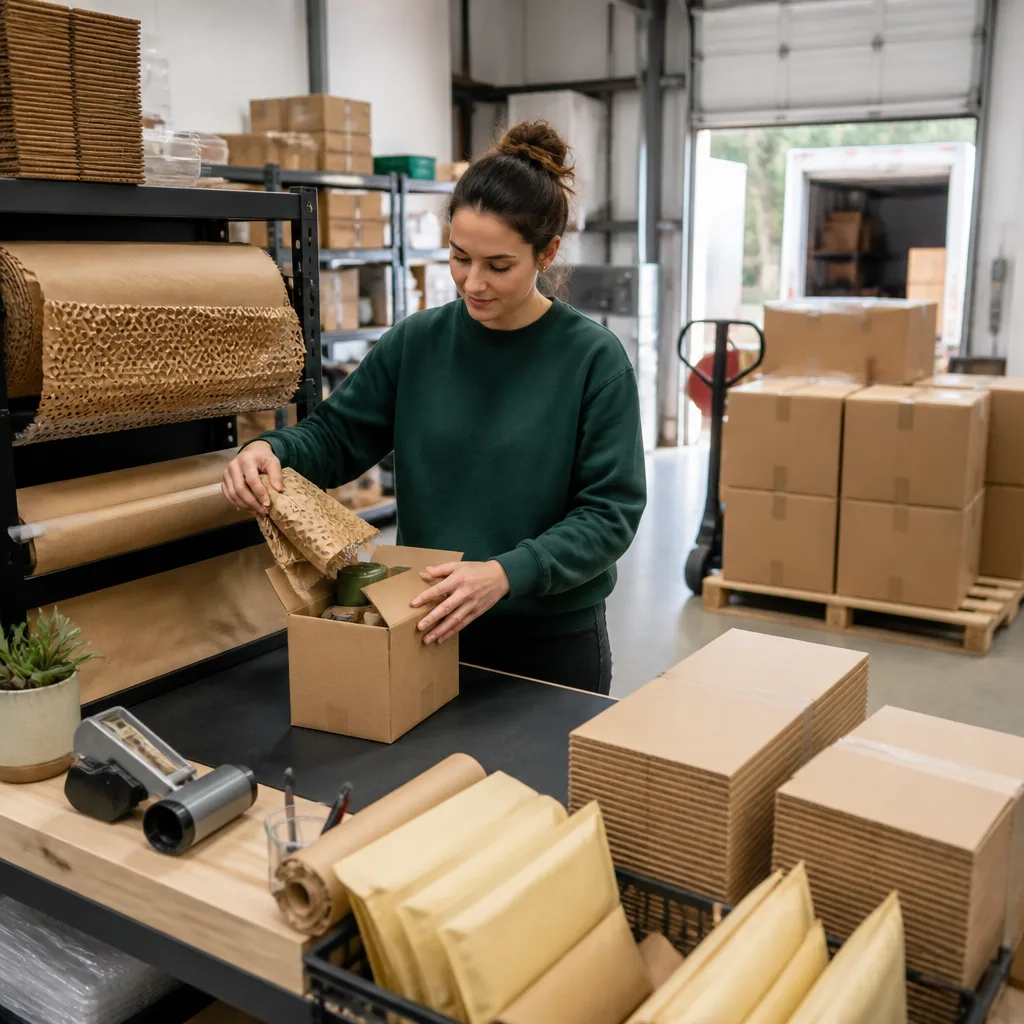
At packing, match the carton or mailer to the product and order. Empty space can allow items to move; an oversized parcel may use more material and may affect shipment dimensions. Too little protection can expose goods to impact. Use packaging guidance appropriate to the item and carrier, and test fragile or unusually shaped products before scaling.
Record exceptions as part of the normal process. Staff need a clear route when a bin is empty, a barcode fails, an item is damaged, or the order does not match the pick list. A good workflow pauses or routes the order for resolution instead of encouraging an undocumented shortcut.
Which measures should you review?
Pick and pack performance should be evaluated with definitions that match the operation. Useful measures may include order accuracy, units or order lines picked per paid hour, time from order release to dispatch, orders shipped by the promised cutoff, inventory discrepancies, damage reports, and return reasons. Report both counts and rates with a clear denominator.
Do not compare a single speed figure across warehouses unless order profiles, shift lengths, product mix, automation, and calculation rules match. A one-item parcel is not equivalent to a multi-line order with fragile goods. Establish a baseline using representative periods and segment results by order type or process where needed.
Use measures to prompt investigation, not to reward a number in isolation. If faster picking increases packing errors, the process has not improved for the customer. If dispatch time is high, find whether the delay comes from order approval, replenishment, picking capacity, packing materials, label generation, or carrier pickup scheduling.
In-house fulfillment or a 3PL?
In-house pick and pack gives a business direct control over staff, workflows, and customer presentation, but the business also manages space, equipment, systems, labour, training, carrier handoffs, and peak capacity. A 3PL can provide warehouse space and operating processes, with the scope varying by provider and contract. Outsourcing does not remove the need to define service expectations or monitor performance.
Ask a prospective provider:
- How are orders imported, held, released, and cancelled?
- What inventory records and movement history can I access?
- Which picking methods and verification steps are used?
- How are shortages, damaged items, substitutions, and late orders escalated?
- Which packaging materials and branded inserts are included or billed separately?
- How are carrier services selected and tracking events returned?
- How are returns inspected and inventory status updated?
- What are the cutoffs, receiving hours, peak-season plans, and service-level definitions?
- Which setup, minimum, storage, handling, packaging, and accessorial fees may apply?
- How can I export item, order, shipment, and inventory data if the relationship ends?
Ottawa businesses can compare local order fulfillment and pick-and-pack services, inventory management, and warehousing with their current in-house process. ByExpress describes its Ottawa operations as providing warehousing, eCommerce fulfillment, distribution, transportation, and cross-border shipping; review its Ottawa 3PL and fulfillment operations directly with the provider to confirm the exact scope, integrations, pricing, and service commitments relevant to your business.
What should you include in an RFP or quote request?
Send the same operating profile to every provider. Include monthly order counts and peak patterns, average order lines, SKU count, product dimensions and handling needs, inventory volume, inbound frequency, destination mix, carrier requirements, packaging rules, returns expectations, and the platforms that need to connect. Share representative order examples rather than a single average.
Ask the provider to separate recurring and variable charges. Clarify receiving, storage, pick fees, additional order lines, packaging materials, shipping, account minimums, special handling, returns, integration, onboarding, and peak surcharges. Compare total cost for a realistic order basket and shipping profile. A quote with a lower pick fee may not be the lower-cost option if packaging, storage, minimums, or postage are materially different.
Request a sample implementation plan with owners, data requirements, testing, inventory transfer, training, first-order monitoring, and issue escalation. Confirm what happens if a system integration is unavailable or a carrier misses collection. A written operating plan is a better basis for comparison than a broad promise of fast, accurate fulfillment.
How does warehouse software connect to pick and pack?
A warehouse management system (WMS) can direct receiving, put-away, replenishment, picks, packing, counts, and inventory status changes. It may connect with an order-management system, storefront, enterprise resource planning software, or carrier platform. Before changing systems or providers, map which system creates the order, reserves the stock, releases the work, prints the label, and confirms dispatch.
Test common exceptions: a multi-line order with one unavailable SKU, a cancellation after picking begins, a partial shipment, a return, an address correction, and a failed tracking update. Ask who monitors each interface and how corrections appear in inventory history. Our companion article explains how to assess a warehouse management system; the two workflows need to be evaluated together because poor data or timing at one stage affects the next.
Frequently Asked Questions
What does pick and pack fulfillment mean? It is the process of locating ordered products, checking the right item and quantity, packing them for delivery, and preparing the shipment for a carrier. A provider may also offer receiving, storage, inventory management, shipping, and returns, but confirm those services in the written scope.
### What is the difference between picking and packing? Picking is retrieving the products and quantities from their storage locations. Packing verifies and prepares those items in suitable packaging, then connects the parcel to its shipment record and label.
What is the difference between picking and packing? Picking is retrieving the products and quantities from their storage locations. Packing verifies and prepares those items in suitable packaging, then connects the parcel to its shipment record and label.
### Is batch picking better than picking one order at a time? Not in every operation. Batch picking may reduce repeated travel when orders share products or locations, but it adds a sorting and consolidation step. Test methods using your actual order mix, space, and accuracy requirements.
Is batch picking better than picking one order at a time? Not in every operation. Batch picking may reduce repeated travel when orders share products or locations, but it adds a sorting and consolidation step. Test methods using your actual order mix, space, and accuracy requirements.
### How should I compare pick and pack costs? Compare the complete cost for the same inventory and order profile, including storage, receiving, each pick, additional order lines, packaging, postage, minimums, returns, integration, and peak charges. Ask for sample calculations and written assumptions.
How should I compare pick and pack costs? Compare the complete cost for the same inventory and order profile, including storage, receiving, each pick, additional order lines, packaging, postage, minimums, returns, integration, and peak charges. Ask for sample calculations and written assumptions.
### Can a 3PL handle branded packaging? Some providers can use customer-supplied or provider-sourced packaging and inserts, but availability, storage, assembly, and per-order fees vary. Specify artwork, materials, quality checks, replenishment, and approval requirements in the scope.
Can a 3PL handle branded packaging? Some providers can use customer-supplied or provider-sourced packaging and inserts, but availability, storage, assembly, and per-order fees vary. Specify artwork, materials, quality checks, replenishment, and approval requirements in the scope.
### What happens when the warehouse cannot find an item? The process should create an exception, verify nearby locations or recent movements, and prevent an unapproved substitution or inaccurate shipment. Ask how stock is corrected, how the customer is notified, and how the cause is recorded.
What happens when the warehouse cannot find an item? The process should create an exception, verify nearby locations or recent movements, and prevent an unapproved substitution or inaccurate shipment. Ask how stock is corrected, how the customer is notified, and how the cause is recorded.
## A better fulfillment process starts with clear handoffs